When it comes to building wealth, most people naturally think about traditional investing—stocks, cryptocurrencies, or other financial assets. However, for entrepreneurs and business owners, there is another powerful option: investing in advertising and marketing. Both approaches aim to grow capital, but they operate in fundamentally different ways.
Comparing ROI – Marketing vs Stocks and Crypto
Traditional investing focuses on allocating capital into external assets with the expectation that their value will increase over time. In contrast, investing in advertising means putting money into systems that can directly generate revenue by attracting customers and increasing sales.
The key question is not which approach is universally better, but which one provides a higher return under specific circumstances. Understanding the differences between these two strategies allows individuals to make more informed decisions and potentially combine them for maximum effectiveness.
Return on investment (ROI) is the most important factor when evaluating where to allocate capital. In traditional markets such as stocks or cryptocurrencies, returns are influenced by market conditions, economic trends, and investor sentiment. While it is possible to achieve high returns, especially in volatile markets, outcomes are often unpredictable and largely outside of your control.
In contrast, marketing investments can offer a more direct and measurable return. When you invest in advertising, you are essentially buying attention. If your offer is strong and your system is optimized, you can generate revenue almost immediately. This makes marketing one of the few investments where the relationship between input and output can be actively controlled and improved.
For example, if a business spends money on advertising and generates more revenue than it costs, the system can be scaled by increasing the budget. This creates a potentially exponential growth model, where profits are reinvested into further expansion.
However, marketing ROI depends heavily on execution. Poor targeting, weak messaging, or inefficient funnels can lead to losses just as quickly as profits. Unlike passive investing, marketing requires continuous involvement and optimization.
Risk and Predictability – Two Different Approaches to Capital Growth
Risk is an inherent part of both investing and marketing, but it manifests in different ways. In financial markets, risk is often driven by external factors such as economic conditions, geopolitical events, and market volatility. Even experienced investors cannot fully control these variables, which makes outcomes uncertain.
Marketing, on the other hand, offers a higher degree of control but introduces operational risk. The success of a campaign depends on strategy, execution, and the ability to adapt. While this allows for greater predictability when managed correctly, it also requires active effort and expertise.
Another key difference lies in time horizon. Traditional investments often require patience, as returns may take months or years to materialize. Marketing can produce faster results, sometimes within days, but sustaining those results requires ongoing optimization.
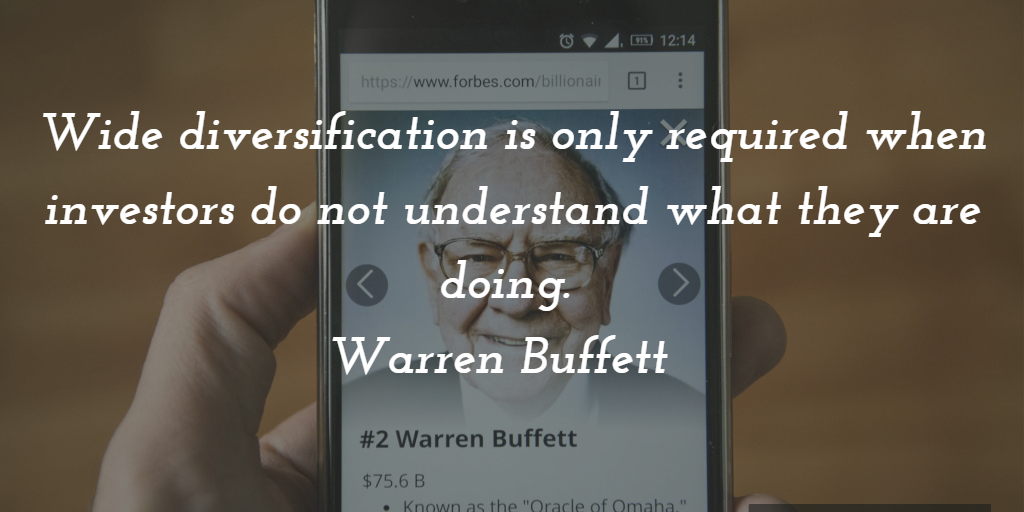
From a risk perspective, diversification is important in both cases. Investors spread capital across different assets, while businesses diversify across marketing channels and campaigns. In both scenarios, the goal is to reduce exposure to a single point of failure.
When Marketing Provides a Greater Advantage
There are specific situations where investing in marketing can provide a clear advantage over traditional investing. This is particularly true for individuals who have a product, service, or business that can be scaled. In such cases, marketing becomes a tool for directly increasing revenue rather than relying on external market performance.
Marketing is especially powerful when there is a proven offer. Once a business identifies a product that sells consistently, investing in advertising can amplify results. The ability to reinvest profits into additional campaigns creates a compounding effect that can accelerate growth.
Another advantage of marketing is control. Unlike financial markets, where outcomes are influenced by external forces, marketing allows for continuous testing and improvement. Campaigns can be adjusted, audiences refined, and strategies optimized in real time. This level of control can significantly increase efficiency and profitability. However, marketing is not a universal solution. It requires skill, experience, and the ability to manage complex systems. Without these elements, the risk of losing capital increases.
Finding the Right Balance Between Advertising and Investing
Rather than choosing between advertising and traditional investing, many successful individuals combine both approaches. Marketing can be used to generate active income and scale business operations, while traditional investments can provide long-term wealth preservation and diversification.
The key is to understand your current situation and goals. If you have a scalable business model, investing in marketing may offer higher short-term returns. If you are looking for passive growth and diversification, traditional investments may be more suitable. Ultimately, both strategies have their place. Advertising provides control, speed, and scalability, while investing offers stability and long-term potential. By using them together, it is possible to create a balanced and resilient approach to wealth building that leverages the strengths of each method.